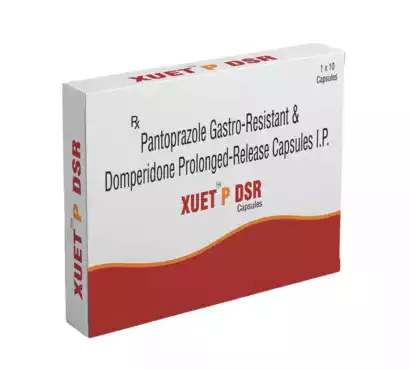
XUET P DSR is the combination of Pantoprazole 40 mg and Domperidone 30 mg is commonly prescribed to treat conditions involving gastrointestinal (GI) issues, such as acid reflux, gastritis, and other related disorders. Here’s a breakdown of how each drug works and how they function together:
1. Pantoprazole (40 mg)
- Class: Proton pump inhibitor (PPI)
- Action: Pantoprazole works by blocking the proton pumps in the stomach, which are responsible for producing gastric acid. By reducing the amount of stomach acid, pantoprazole helps treat conditions like acid reflux, gastroesophageal reflux disease (GERD), gastritis, and ulcers.
- Uses:
- GERD: Prevents acid reflux and heartburn.
- Peptic Ulcers: Promotes healing of stomach and duodenal ulcers by reducing acid.
- Zollinger-Ellison Syndrome: A condition where the stomach produces excess acid.
2. Domperidone (30 mg)
- Class: Anti-emetic and prokinetic agent
- Action: Domperidone works by blocking dopamine receptors in the stomach and intestines, which helps increase gastric motility (the movement of food through the stomach and intestines). It also acts as an anti-nausea medication by preventing nausea and vomiting.
- Uses:
- Nausea and Vomiting: Often used to control nausea caused by various factors like medication side effects or digestive disorders.
- Gastroparesis: A condition where the stomach empties too slowly, leading to bloating, nausea, and discomfort.
- Acid reflux: Helps to improve the movement of food and acid, reducing symptoms of reflux.
Benefits of the XUET P DSR:
- Reduced Acid Production and Improved Gastric Motility: The combination addresses two key issues in gastrointestinal problems:
- Pantoprazole reduces the acid production that can irritate the stomach lining or esophagus.
- Domperidone enhances the movement of food through the digestive tract, reducing symptoms like bloating, nausea, and discomfort.
- Improved Relief for GERD: This combination can provide better overall relief for people with GERD or acid reflux, as it both reduces acid production (Pantoprazole) and improves esophageal motility (Domperidone).
- Helps Prevent Gastric Stasis: In conditions like gastroparesis (delayed stomach emptying), this combination helps promote normal stomach function and reduces symptoms like nausea, bloating, and indigestion.
Common Indications:
- GERD (Gastroesophageal Reflux Disease): This combination is often used to treat symptoms of acid reflux, such as heartburn, regurgitation, and discomfort.
- Peptic Ulcers: Helps reduce gastric acid, allowing ulcers to heal more effectively.
- Gastroparesis: In cases of slow stomach emptying, it helps with food movement and alleviates nausea or bloating.
- Nausea and Vomiting: It’s also used to prevent nausea, especially when it is related to delayed gastric emptying or acid reflux.
Side Effects:
- Pantoprazole:
- Common side effects: Headache, diarrhea, abdominal pain, flatulence.
- Long-term use: May lead to vitamin B12 deficiency, bone fractures, or kidney issues.
- Increased risk of infections: Because it reduces stomach acid, long-term use may increase the risk of gastrointestinal infections.
- Domperidone:
- Common side effects: Dry mouth, headache, dizziness, abdominal cramps.
- Rare but serious: Prolonged use or higher doses of domperidone may increase the risk of heart-related side effects, such as arrhythmias (irregular heartbeats), particularly in people with existing heart conditions.
Precautions:
- Heart Conditions: Domperidone should be used with caution in people with heart problems, such as arrhythmias, because it can cause changes in heart rhythm.
- Kidney/Liver Issues: If you have kidney or liver problems, this combination should be used cautiously, as both medications may require dosage adjustments.
- Pregnancy/Breastfeeding: Both drugs should only be used during pregnancy or breastfeeding if clearly needed, under medical supervision.